

When students imagine studying in Germany, names like Berlin, Munich, or Frankfurt come to mind. These cities offer glamour, buzzing nightlife, international exposure, and fast-paced student life.
But there’s another side to Germany: smaller, lesser-known cities that quietly offer everything a student could ask for, at half the cost.
If you dream of quality education but worry about skyrocketing living expenses, this blog explores Germany’s affordable hidden gems, cities with world-class education, welcoming communities, and lighter living costs.
Why Look Beyond the Big Cities?
Before diving into names, let’s ask: why not Berlin or Munich?
- In Munich, average monthly rent can exceed €1,200 (₹1 lakh+)
- In Berlin, finding anything under €800–€900 is difficult
- Everyday expenses – transport, groceries, leisure – are 30–40% higher
- High competition for part-time jobs and accommodation adds stress
Compare that with smaller cities:
- Rent: €250–€400
- Cafes serve meals for €5
- Walkable campuses, no crowded metros
Suddenly, student life is more manageable, personal, and affordable.
City 1: Magdeburg – The Green Capital of Saxony-Anhalt
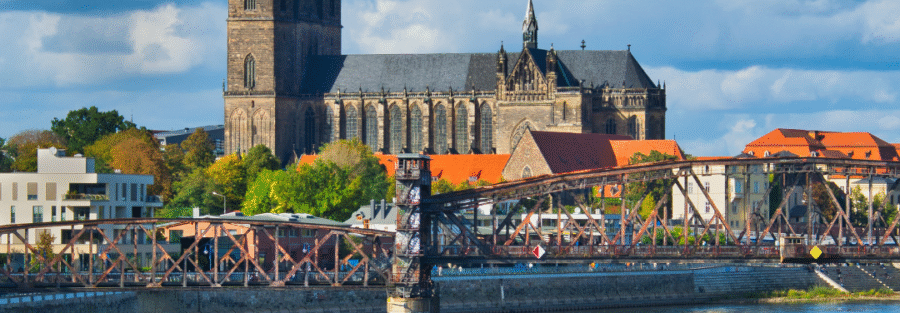
Nestled on the River Elbe, Magdeburg is one of Germany’s oldest cities with a modern, student-friendly vibe.
- Cost Advantage: €300–€350 rent per month
- Universities: Otto von Guericke University – engineering, natural sciences, economics
- Lifestyle: Compact, green, and bike-friendly; riverside walks and parks
- Part-time Jobs: Opportunities in logistics, retail, hospitality
“Sometimes, the most peaceful places are where your ideas grow the loudest.”
City 2: Chemnitz – Germany’s Hidden Engineering Hub
Chemnitz, in Saxony, is perfect for budget-conscious students.
- Cost Advantage: Accommodation €250–€300
- Universities: Chemnitz University of Technology – strong technical programs
- Lifestyle: Small, lively cafes, strong student community, affordable transport
- Special Edge: Close to Leipzig and Dresden, blending affordability with access to bigger hubs
“Don’t measure a city by its size, measure it by the opportunities it gives you.”
City 3: Halle (Saale) – The Artistic, Affordable Haven
Halle is ideal for students who love creativity and history.
- Cost Advantage: €650–€700 monthly living, rent €300–€350
- Universities: Martin Luther University of Halle-Wittenberg – one of Germany’s oldest universities
- Lifestyle: Art galleries, theaters, music festivals – perfect for humanities and arts
- Bonus: Leipzig is only 30 minutes away for weekend escapes
“Affordable living, priceless experiences.”
City 4: Kiel – The Seaside Student City
Love the ocean? Kiel in northern Germany offers a unique student experience.
- Cost Advantage: Student housing €350–€400
- Universities: Kiel University (Christian-Albrechts-Universität) – marine sciences, engineering, medicine
- Lifestyle: Sailing festivals, beach hangouts, seafood markets
- Special Edge: Fresh sea breeze and laid-back culture
“Study where the sea meets the soul.”
City 5: Jena – The Small City with Big Opportunities
Jena, in Thuringia, is a hub for research and innovation.
- Cost Advantage: Rent €300–€350, overall €700
- Universities: Friedrich Schiller University Jena – renowned for physics and life sciences
- Lifestyle: Youthful atmosphere, thriving start-up scene, international student community
- Special Edge: Surrounded by hills and vineyards
“In small cities, your ideas often get the biggest stage.”
City 6: Rostock – Where History Meets the Baltic Sea
Rostock is rich in maritime history and offers a welcoming student vibe.
- Cost Advantage: Rent €300–€400
- Universities: University of Rostock – engineering, medicine, sciences
- Lifestyle: Baltic coast beaches, sailing trips, tight-knit student communities
“Some cities teach you lessons, others give you horizons.”
Cost Comparison: Big Cities vs Hidden Gems
Here’s an estimated monthly budget breakdown for students:
| City | Rent (€) | Food (€) | Transport (€) | Total Avg (€) |
| Munich | 700-900 | 250 | 90 | 1,200+ |
| Berlin | 600-800 | 220 | 80 | 1,000+ |
| Magdeburg | 300-350 | 180 | 60 | 650-700 |
| Chemnitz | 250-300 | 170 | 60 | 600-650 |
| Halle | 300-350 | 180 | 60 | 650-700 |
| Jena | 300-350 | 180 | 60 | 650-700 |
| Rostock | 300-400 | 200 | 65 | 700-750 |
Final Thoughts: Don’t Just Follow the Crowd
Studying in Germany is not about the city name on your address card. It’s about affordable living, personal growth, and creating memories without financial stress.
Hidden gems prove that you don’t need Berlin’s hype or Munich’s skyscrapers to succeed. Sometimes, the best student stories are written in the quiet lanes of Halle, the breezy shores of Kiel, or historic Magdeburg.
“Education is not about where you study, but how you live while you study.”
At En-route Deutschland, we help Indian students discover Germany beyond the obvious choices. We guide you to affordable cities, student-friendly lifestyles, and world-class universities so you can enjoy your studies without financial stress.”